This article is part of the following topics: Academics & Studying Featured Early Elementary School Elementary School Kindergarten Learning & Achievement Middle School Schedule & Extracurricular Activities
Better Grades—You Can Help!
Make sure your child is ready to learn and achieve at school with these 10 smart tips on what you can do at home to prepare her for success.
Parents who want to help their children succeed in school must strike the proper balance. They should be involved—but not too involved. They should set limits—but allow freedom. They should encourage their kids to excel—but not expect perfection. However, it’s not as hard as it might sound to help your kids enjoy their academic experience. Here are 10 tips from experts on how to make this year a great one for your family.
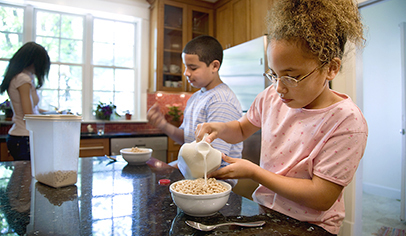
1. Create a routine. “Kids benefit from having structure in their home life,” says Michael Popkin, PhD, author of Helping Your Child Succeed in School and founder of Active Parenting Publishers. He recommends getting up at the same time each morning, eating a nutritious breakfast, and instituting a positive bedtime ritual that includes 20 minutes of reading (up to middle school). “As the kids get older, they can take turns reading with you,” he says. “Let it be interaction time. They can ask questions and discuss what they’re reading and talk about other ways a story might end.”
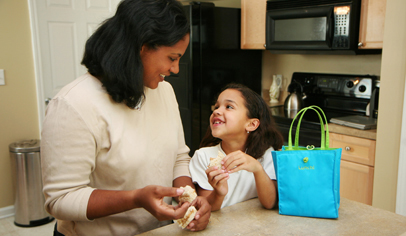
2. Prepare for the morning the night before. Avoid morning chaos by eliminating the need for last-minute decisions. A bad morning practically ensures a difficult day at school. So accomplish as much as possible before bedtime, such as helping your child choose what clothes to wear and gathering all needed school materials in the same “launching spot.” Having a backpack prepared with all essentials also helps foster self-confidence. “Teachers view our kids as poor students if they always forget critical items they need to bring,” says Stacy DeBroff, author of The Mom Book Goes to School and founder of the website Mom Central. “It affects teachers’ perceptions of our kids as dedicated learners.” And those attitudes in turn influence student performance.
3. Help your child get organized. Organization extends beyond assembling the next day’s materials. Kids need help developing a system for storing and retrieving items so that they feel in control of their success. DeBroff suggests using color-coded folders each year so that a child can easily connect a color with a subject and thus find material quickly. Helping children keep backpacks uncluttered and storing all school items in a safe place can also train children to develop organizational habits that will serve them well throughout their lives.
4. Provide a quiet place for homework, but let your child work alone. A regular time and a good workspace to complete homework are essential, and homework should be a household priority. On the other hand, remember that the work is your child’s responsibility, not yours. “Keep the house quiet during homework time, but don’t stand over your child while he or she is doing homework,” Popkin says. “Be available to help. But you don’t want to make it a ‘Let’s sit down and do our homework’ process.” Remember that homework provides important information about student comprehension to teachers, so you do your child a disservice if you correct answers. If you feel that you must help, point out mistakes but let your child figure out how to fix them.
5. Limit distractions. Television, computers, and video games can be a huge competitor for your child’s attention, especially when it comes to homework, so limit these activities, at least on school nights. But the problem with these kinds of diversions extends beyond the way they waste time because they also create a mindset in children that makes school seem boring. “TV encourages children to be passive recipients of information and trains their brain to pay attention to rapidly changing, highly stimulating information,” says Robert Needlman, a developmental and behavioral pediatrician at MetroHealth Medical Center in Cleveland. “As a result, kids tend to turn off and tune out from less highly stimulating information, such as someone reading to them or a teacher talking to them.”
6. Encourage intellectual curiosity. Engage your child in dinner-table conversations. Share your own interests, such as what you’ve learned recently about gardening or playing the piano. Talk about current events. Nourish your child’s curiosity about the world, and you will instill a love of learning. “When my child was young, we would take family walks and play a game in which one of us would be a legislator and one of us would be the president and one of us would be a representative from the other house,” Needlman says. “Somebody would propose legislation such as ‘I propose we should have extra dessert.’ Then we’d debate it.”
7. Allow free time. Every child needs time to unwind, so be sure that at least part of each day is free of responsibilities. In particular, don’t overschedule your child with too many afternoon activities. “After a long day at school, if you’re zipping off for trumpet lessons or soccer practice, there’s suddenly very little downtime,” DeBroff says. “You have to make sure your children have pockets of time to replenish their energy.” Opportunities for unstructured play, according to a report from the American Academy of Pediatrics, protect children’s emotional development as it helps them manage stress and become resilient. The absence of such free time creates unnecessary anxiety.
8. Build relationships with teachers. “Open the lines of communication,” says DeBroff, who suggests writing a letter to the teacher at the beginning of the year about what motivates your child and possible areas of difficulty. She also suggests asking the teacher how things are going and being open to hearing about problems. And don’t criticize teachers, especially in front of your child. “Make teachers more ready to put in extra effort when stumbling blocks appear,” she says. “If teachers feel they are getting criticized by parents or getting disrespectful attitudes from children, it really affects how the kids are doing.”
9. Focus on effort rather than grades. Show confidence in your children’s abilities but don’t ask too much of them. “If you’re always raising the bar, they never feel quite good enough,” says Popkin, who advises starting with strengths. “If they get a report card and they’ve got A’s and B’s and also one C, don’t just jump in on the C. Start with a focus on what they did well. Then talk about how they feel about the C and whether that represents good effort for them or if they need to work on it.”
10. Learn how to step back. When evaluating your child’s overall performance, be careful not to let your own ambitions take over. “When parents get too involved, by definition kids are miserable,” Needlman says. Resist the urge to micromanage your child’s education. School is your child’s job, not yours. Stop worrying about whether your child is doing well enough to get into a good college. The result of such pressure is that children feel like failures. “A child that might have been a really happy average student and would go on to be perfectly successful in life might become an unhappy average student or an unhappy above-average or excellent student struggling to deal with depression and anxiety.”
If you found this article helpful, sign up for our email newsletter and get all the latest tips and information delivered right to your inbox.
More information and ideas to help your kids:
- Printable Thanksgiving Worksheets
- Food Allergies and School-age Kids
- Seasonal and Swine Flu: How To Protect Your Family
- Teacher Gift Ideas for the Holidays
- Topics A-Z


Posted by - bob on Oct. 11, 2009
Number 5 is way offPosted by - Samiesue on May. 25, 2009
Hi,My name is sam i am a kid about to turn 15. The things listed are very inportant and very true. My mom does some of these things and i love it when she is conserned but.... i dont like it when she is conserned all the time. she had me in Violin lessons i loved it till she forced it on me i become tired of it. She stoped lisning to my intrests and tryed to give me what she couldnt have when she was a child. To all you moms out there take time and lisen to your kid and dont over whelm them. I need help though how do I keep my mom off my back about school?
Posted by - MES Roth on Feb. 04, 2009
Do most kids learn to read before/ during kindergarten? I felt my son entered kindergarten well prepared (knowing all letters, recognizing many words, being able to count to 100,etc.), only to find out that a large percentage of his classmates are all ready reading. I think he'll be fine, but I feel I didn't do enough to prepare him...Posted by - Blanca Magana on Jan. 09, 2009
Thank you very very much, this article will hep me to avoid a lot of mistakes that I have make with my 7th grader. This is so helpful. Thanks a lot again. Blanca MaganaPosted by - Julie B. on Jan. 02, 2009
Thank you so much for this information. I find it very helpful. It has helped me, particularly to know some ways we might have been pushing our child a bit too much.Posted by - sharon gaoa on Dec. 15, 2008
Hello,I am a parent and PTA President at my girls shcool. I love this site because I can use some of the tips suggested on various topics toward my children; and at my PTA meetings I always encourage all the parents to sign up with this web site. You all provide a lot of helpful info to us parents. THANK YOU SO MUCH!!!
Posted by - Carmen on Dec. 14, 2008
My son is six years old, he is in first grade. How can i help him in his writing, he takes more than forty minutes writing one sentence.Posted by - Glinda Johnson on Nov. 30, 2008
Thank you, this is a very good and helpful site. It's very important to interact in your child's education and quility time is a need. Thank You again. ----GlindaPosted by - Mayra on Nov. 15, 2008
I need some advice my son is in the Pre-K. He is a good student but when he see somebody else do something, he do it too. Also he knows the letters but when is time to do his homework or time that I ask him about what he knows he don't say nothing. Can anyone give any suggestions.Posted by - emily on Nov. 03, 2008
i need some advice my daughter is in the first grade. she knows herhomework . but when it comes to test time she is not getting good grades i have tried everything can anyone give any suggestions.
Posted by - Deborah H on Sep. 17, 2008
Thank you very much for the article titled Better Grades- You Can Help!written by Evelyn Beck. I would compare the information in this article
to gold for most parents. This information will be shared with our parents/guardians . Again thank you.
Posted by - Benjamin on Sep. 11, 2008
YOUR PROGRAM ITS GREAT FOR CHILDRENPosted by - Rachceda King on Jun. 23, 2008
Thank you this site is very informational and it helped me out alot with ideas that I need i could find everything I needed.