Schoolfamily.com - Helping parents help their kids succeed at school

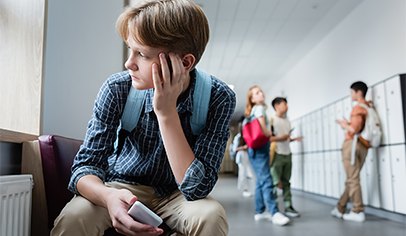
Kids are often reluctant to talk about bullying. Here’s how to spot it and what to do if your child is a victim.

Welcome! Login | Register
Advertisement
Lowe's Build and Grow

PTO/PTA Leaders

Get free tools and tips to help you run your group from PTO Today—the #1 resource for school parent groups.

SchoolFamily Twitter

Advertisement
Lowe's Build and Grow
Who in your house is getting a flu shot this year?
Poll Archive

Sponsored Links

Print & Use School Tools

Internet Safety Contract

Make sure your child knows how to stay safe online and what your expectations are. This contract should be signed by both child and parent, and includes rules about safety as well as behavior while on the Internet. Learn more about keeping your family safe on the Internet.

Lots more downloadable tools to help keep your family organized!

This article is part of the following topics:   Bullying Early Elementary School Elementary School High School Kindergarten Middle School Talking With Your Child About School

Bullying: How Parents Fight Back

Kids are often reluctant to talk about bullying. Here’s how to spot it and what to do if your child is a victim.

by Evelyn Beck

Bullying is all too common among school-age children. In 2005, one out of four children had been a recent victim of bullying, with 6th graders the most vulnerable, according to the National Center for Education Statistics.

As a parent, the challenges include identifying when your child has been bullied and determining the best response.

First, it’s important to be alert to signals that something is wrong. “If your child is not sleeping, not enjoying herself, not eating, or eating too much, you know there’s something going on,” says Stan Davis, author of two anti-bullying books and publisher of the website Stop Bullying Now. “That’s an indication to increase the amount of time you’re spending with her. And point out what you’re seeing. Say ‘You don’t seem happy. What’s going on?’ ”

He cautions that the root of the unhappiness may simply be puberty or other anxieties. But spending time together doing activities you both enjoy can be a way to help your child heal as well as a way for you to glean more information.

If your child is being bullied, determine the seriousness of the behavior and whether it is being repeated. On the low end of the spectrum, if another child is sticking his tongue out at your child or acting unfriendly, you may just want to help your child deal with that. In that case, Davis says, “It’s fine to acknowledge that there are people who enjoy being mean and that young people will have distress but will have to get used to it.”

Kids can also distance themselves from this kind of bully. But understanding the need to do that can be hard for children, who tend to see only two kinds of people: friends and enemies. Parents can help them understand that there are also people you just avoid.

In the middle range might be name-calling. Davis advises asking your child what he has already tried before offering advice; that way, you won’t look stupid by suggesting ideas that have failed. Then strategize for other possible approaches. If those don’t work, it’s time to involve the school.

Then there is behavior that Davis calls “completely intolerable.” This could include threats or physical harm. In this case, involve the school immediately. But don’t overreact when speaking to your child or to the school. “It’s important for parents to have a real good check on their own emotionality before talking to their child,” he says. “The problem with showing that emotion is that the child may think Dad’s blood pressure is going up and won’t tell him the next time. Or the child worries that you’ll charge in angrily to the school and make things worse.”

The School’s Role

Davis often sees such hesitancy in children who are the targets of cyberbullying, such as harassing text messages. “Most young people think parents will say ‘No more cell phone or MySpace,’ ” he says. “A lot of kids have told me you can’t tell parents that stuff or they’ll overreact.”

Trevor Romain, author of the self-help book and video Bullies Are a Pain in the Brain, agrees. “Kids are afraid to tell,” he says. “They worry that parents will go to the other kid’s parents and cause a big stir. Listen to what your kids are asking for. It might be going to a counselor or teacher or helping the child to figure things out.” When you do decide to contact the school, Romain suggests calling or emailing first as a way to defuse tensions.

Davis advises bringing a list of exactly what’s been reported by your child. But don’t label it “bullying,” and don’t accuse the school of failure. “Go in with the assumption that the school is not aware of what’s going on and that they’ll do their best to fix it,” he says. “Don’t alienate people and make them defensive.” If you do, he explains, you risk driving away people who could be allies.

Instead, make a point of praising what the school has done well during your child’s time there. You might say, “I’m surprised this is going on because my child’s experience here has been so positive in this way and this way.”

Ask school officials what they plan to do and when you can expect to hear more details. Then check back to ask what’s been done and to share what you’ve heard from your child. If the solution isn’t working, ask what else can be done. Throughout this whole process, take notes so that you have documentation.

One solution you might expect from the school is increased supervision. “We see these problems with bullying happening during unstructured times during the day, when there are low levels of adult supervision—during transitions to and from classes, on playgrounds, during lunch periods, and during gym time when kids are changing,” says Duane Thomas, an education professor at the University of Pennsylvania who works with the Philadelphia Collaborative Violence Prevention Center. “That’s when schools could be more active in supervising the behaviors of students.”

He also recommends that parents ask the school to separate misbehaving kids. “We see increases in bullying behavior by the type of kids they hang out with,” he says. “There needs to be a concerted effort in breaking up these subcultures of bullies.” The school can place them in different classes, for example.

Thomas emphasizes that it takes a unified commitment to ending the behavior of bullying and that targeting one particular child will not work. “It takes focusing change on the whole schoolwide environment and the classroom climate, as well,” he says. “It takes parents being very vocal and advocating for their kids. At the school level, it takes parents, teachers, administrators, support staff, cafeteria workers, and janitors supervising students—and the students having a voice, as well, and making a pledge not to bully or to tolerate this behavior.”

You might also ask the school to encourage other kids to spend time with your child as an antidote to the social isolation that can result from bullying. “Other students may stay away from the kid getting picked on, or they’re embarrassed that they didn’t do anything to help,” says Davis. Such isolation can be even more damaging than the bullying.

If the school is unable or unwilling to solve the problem, then approach the school board or superintendent.

What’s most important is to take action. “Involve the school very early when you start to see these problems,” says Thomas. “Two-thirds of students feel that schools and adults in general do a poor job responding to bullying.”


If you found this article helpful, sign up for our email newsletter and get all the latest tips and information delivered right to your inbox.

More information and ideas to help your kids:


Rate This Article (Click on a star)

25 Votes

Comments

  1. Posted by - Tonya on Jun. 04, 2009

    My children attend a private school, the children follow a policy called Peace Builder Pledge. With this pledge the children are taught daily about becoming Peace Builders. This program overall has been a very positive program for the school, however this year both of my son's have been experiencing problems with children in their class more than usual. When I say more than usual, in the past it would be something small here and there and would be addressed quickly. This year my oldest is experiencing bullying through verbal and humiliation by another student. This makes it very hard to prove as well because the majority of the time it comes down to a He said - He said situation. My youngest son has experienced physical bullying, he is 7 and last week on the the playground he was attacked by three of his "best Friends" by having his arms held, his head held, the other one started to hit him and then two other boys saw this going on and decided to 'jump on" as they explained to the principal. Four of the five boys have been good friends with my son so it does not make a lot of sense to me or school why they did this to a friend. IT was two days before the end of school and no punishment was given to the boys, I am not sure if it was due to their age or the end of school or what but it seems at times that our school does NOT follow the Zero Tolerance Policy and I would like to know how to enforce it.
  2. Posted by - Debra on May. 30, 2009

    I am a teacher and I will tell you it's hard to know when kids are bullying. They don't do it in front of the teacher, obviously. The only way we find out is if the victim or someone witnessing the event tells us. Kids have to speak up! We have to coach them to speak up everyday. My own son was bullied in the eighth grade this year. He was being physically held and hit by a gang of bullies. My child told me about the bullying and begged me not to tell the school because he was afraid if the school go involved, the bullying would get worse, and the sad part is right. I went around corners and talked to the football coach who took care of the problem for me without mentioning my child's name. The bullying stopped for my child but that by no means stops them from bullying others.
  3. Posted by - MOM on May. 19, 2009

    we just move into a new home. There are two twin girl that live on the conner they pretty much run the street. They are in the 5th grade and my child is in the 3rd grade. They are very mean to my child. I keep my child in our back yard to keep her safe. They tell her on the bus that they are going to cut her troat or chopp her legs off. She is very scared of them. They came to our back yard teaseing and calling her names. i have to watch at all times so they dont hurt her. I put a tape recording out so i could record them . They told their mom and she came to my house 3 yards away. She called the police and told them I was taping her children. I told the police yes and i was going to put a cammra as well to keep my child safe. The police spent about 20 min. talking to the lady and her children and told me to remain in my yard.
    They were very rude and didnt care the my much younger child was being bullied. My child cried and said she was affaid of getting on the b us for fear of them. she said they would really be mad now. one of the twins has kick and hit her. I really dont know what to do.
  4. Posted by - Jonas on Feb. 27, 2009

    Richard, it sounds like you need to take Toms advice, also your daughter must be asking for problems if she is a freshman taking a senior to her prom, I am glad that I do not have a daughter that I have to worry about becoming damaged goods.@Q!Q
  5. Posted by - Richard on Nov. 11, 2008

    My daughter is getting bullied by four girl that wanted to beet her up at homecoming the school was not doing anything then a day before homecoming the school call and told me that my kid was not alond to go and the others girls was not too but that was a loss for my daughter's date she was taking a serior and if she did not do anything why is it taking from her that just worng her first homecoming and she could not go not right.
  6. Posted by - Karen on Aug. 26, 2008

    My older daughter was being bullied. First it was general name calling. She was told to avoid the bully, but the bully (a boy) sought her out. I went to the school administration about it. They suggested that my daughter meet with the bully so that "they" could talk about it. I explained to him that I worked with battered women and children. I would never think of placing a victim with the person who battered them. That a batterer/bully would find reasons to validate the behavior. He asked me to speak with the school counselor. To tell her exactly what I told him. I'm glad to say that aftward the school changed it's policy. There now is a no tolerance policy for bullying. The bully now must attend classes for behavior. My daughter is very happy now. The bully was removed from school after he started to physically attack another student. He had victimized this student before and had gone to "counseling" with the victim before the policy was changed.
  7. Posted by - patty on Jun. 14, 2008

    I feel this article is right on the money. Don't attack you get better results but if you are not happy stay calm and go to the next level of the school board. They don't want negitive things going on in school do to ratings and new prospects . Its a long road but us parents have to do it.

Add Comment