Schoolfamily.com - Helping parents help their kids succeed at school

For kindergartners, school is all about having fun and making friends.

Welcome! Login | Register
Advertisement

PTO/PTA Leaders

Get free tools and tips to help you run your group from PTO Today—the #1 resource for school parent groups.

Advertisement
Lowe's Build and Grow
Do you think your child is expected to learn more or less than you were at the same age?
Poll Archive

Print & Use School Tools

Back-to-School Planning Guide

Getting ready for a new school year requires a little organization. Stay on track all summer long—and still have plenty of time for family fun—with this checklist.

Lots more downloadable tools to help keep your family organized!

This article is part of the following categories:   Kindergarten School Life

Kindergarten Social Changes: What To Expect

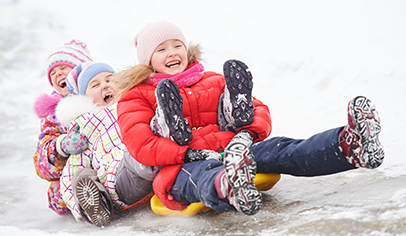
For kindergartners, school is all about having fun and making friends.

by Patti Ghezzi

Kindergarten used to be all about developing social skills. These days, it’s more about learning to read and getting ready to tackle academic subjects in 1st grade.

Still, a primary intent of kindergarten is to teach children to work together, share, accept each other’s differences, solve problems by communicating, and enjoy playing with each other.

Luckily, these things come naturally for most 5-year-olds. “Children are so cheery at that age,” says Nancy Davenport, president of the National Association of Elementary School Principals. “They are bright, full of energy, and just love school.”

For some kids, it’s their first chance to interact with other children all day long and to be part of a learning community. It can be an adjustment, especially for children who are used to spending every day at home, whether with Mom or another caregiver. But most kids have had loads of school-like experience by the time they enter kindergarten.

Parents should expect occasional bumps in the road as their children adjust to the kindergarten classroom. Some kids might cry a little. Some might have a hard time sharing toys or understanding that the toys belong to the class as a whole, not just to them. But after a week or so, most kindergarten classrooms are humming along beautifully.

“Whenever a principal has a bad day, you go down and visit a kindergarten class,” Davenport says.

Fostering Cooperation

Kindergartners are innocent. They believe, for the most part, that everyone is their best friend. Most will happily play with a child of the opposite sex and join in with a group of kids they don’t know well. They aren’t picky about whom they sit next to at lunch. They crave being around other children and might beg for play dates with their classmates even after spending all day with them at school.

Many kindergarten activities are built around encouraging kids to socialize, even if they appear more academically oriented. Teachers often set up centers and allow children to choose which activity they want to do. Many activities require children to work in groups or pairs.

Some kindergarten classrooms have play areas, such as a kitchen, where kids can “play house,” a game that fosters cooperation.

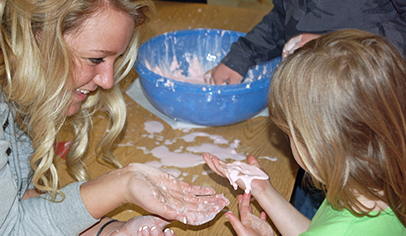
Kids of this age need hands-on activities, such as decorating a pumpkin or gathering leaves in autumn. Kindergarten teachers are often creative in coming up with ways to build upon a theme so their students will be engaged. “There are so many things that can accompany a lesson,” Davenport says.

Young children have shorter attention spans and need to move from activity to activity. If they’re left too long on one task, many will lose interest, which could lead to misbehavior.

Another characteristic of the kindergartner is the tendency to ask question after question. Parents should seize upon that curiosity, Davenport says. “It’s so important to take advantage of those early years,” she says, noting that answering a child’s question gives the parent an inside track to finding out about her day, what she’s thinking, and what her interests are.

Patience is required when a child is in kindergarten. Children develop at their own rates; some will not be as outgoing as others. This is not an indication that a child will be shy for life, just that the child may need more time to adjust to being surrounded by so many people.

Sensitivity Toward Others

Kindergartners are extremely attuned to the world around them, says Masha Rudman, director of the elementary education teaching program at the University of Massachusetts Amherst. They notice everything and find simple things like a trip to the grocery store or a walk around the block fascinating. Parents can take advantage of this by bringing number facts, letters, and words into everyday activities.

Children of this age are also sensitive to others and may become sad when they see that a classmate is sad or be genuinely distraught over a story, even if the characters are animals. Because of the socialization mission of kindergarten, children are often encouraged to express their feelings. They may lack the vocabulary to share how they truly feel, relying on basic statements like “I feel sad” or “I feel scared.”

Teachers and parents can help children fill in the blanks as they try to express how they are feeling—for example, “Maybe when you heard in the story that Mary’s grandmother got sick, that made you think how you would feel if your grandmother got sick.”

In kindergarten, children are finding their way in a world that is suddenly bigger and more complex than they ever imagined. Parents and teachers are the tour guides, but they can only guide. The kindergartner has to cross the bridge from preschool to 1st grade on his own two feet, a realization that may be exhilarating for children and more than a little scary for their parents.

For more information, read “Kindergarten Academics: What To Expect”


If you found this article helpful, sign up for our email newsletter and get all the latest tips and information delivered right to your inbox.

More information and ideas to help your kids:


Rate This Article (Click on a star)

7 Votes

Comments

  1. Posted by - Vicki on Jan. 29, 2009

    I have a grandson who just turned 5 on June 15. He is very small for his size, inmature, and has started misbehaving at school. He does not want to sit down and do his homework. His parents have gone to the school several times about his behavior and the fact he has even gone to the office. As for as his studies he is in the bottom third of his class and is the youngest child in the class, He is reading on a level of 1-2 where others in his class are on level 12-13. In journal time he is only writng 2 sentences and the others are doing around 5 to 7 sentences. He needs to practice on sight words and some sounds.
    As a 2 through 8 grade teacher I have encouraged his parents not to put him in school until he turned 6, He was in a home day care and was never exposed to any type of classroom structure. I feel that he will fall through the cracks and always be the last in the class. After getting his report card I have suggested that they take him out of school and let him have one more year to mature. Then put him back in the same classroom next year. Hopefully he will have matured and be able to focus better. I feel that the behavior problems will be much better and he will the oldest in the class instead of the youngest.. I want him to be at the top of his class rather than having to struggle at the bottom. Please give me any suggestions that I can help my children see that if he was one more year older that most of what they are dealing with would not be there,.

    Thanks for any help you can give me.
    Concerned teacher and Grandmothet
  2. Posted by - renee on Dec. 27, 2008

    My daughter is in kindergarden where they have a behavior system included in there curriculum. My daughter's very social for she has attended pre-k before kindergarden. My problem that I'm having is the constant remarks about her not staying focused, on task, and other remarks. She's at times very busy but she also very apt to learning. I have a vast collection of learning tools at home that she has access to as well. Relative to the kindergarden environment being I don't want my child being excited about going to school and at the end of the day coming home distraught because she received a sad face!!! for her behavior. Granted I'm not there to see what is actually taking place as to what initiates her negative behavior but the stress of seeing and hearing these statements concerning my child who is at times in tears concerning this. Should I just ignore or should I transfer her to another class or what?
  3. Posted by - Wendy on Nov. 30, 2008

    If your child is playing with other children well (other than at school) then I would not worry to much about it. She may be haivng a hard time adjusting to school. I bet having her home burn down has had a very big effect on her life. She no longer lives where she used to, has additional stress from the family going through hard times, lost some of the things that mean the most to her. I would look into seeing if her teacher is the best one for my child because she doesn't seem to be to understanding to your situation. How did your child interact with other children before kindergarten? I would do what you think is best because Mother knows best, not teacher.
  4. Posted by - WENDY on Nov. 12, 2008

    Hello

    I would like to know if someone could help me. I have a 5year daughter that just started kingergarden in september. I meet with her teacher and she stated she is not doing anything in class. she claims she has no social skills. My child come home from school everyday does her home work and then wants to play school. I would like to know what should i be expecting from my five year old. In august of this year our house has burnt down and we were left with just the clothes on our back. We asked the teacher if she think that could be effected her in anyway she claims no. If someone else could give me some suggested i would appriciate it .

Add Comment


Click to get a new image.